




About WRL
Worlds & Robotics Lab
Connecting People, Worlds, and Robots.
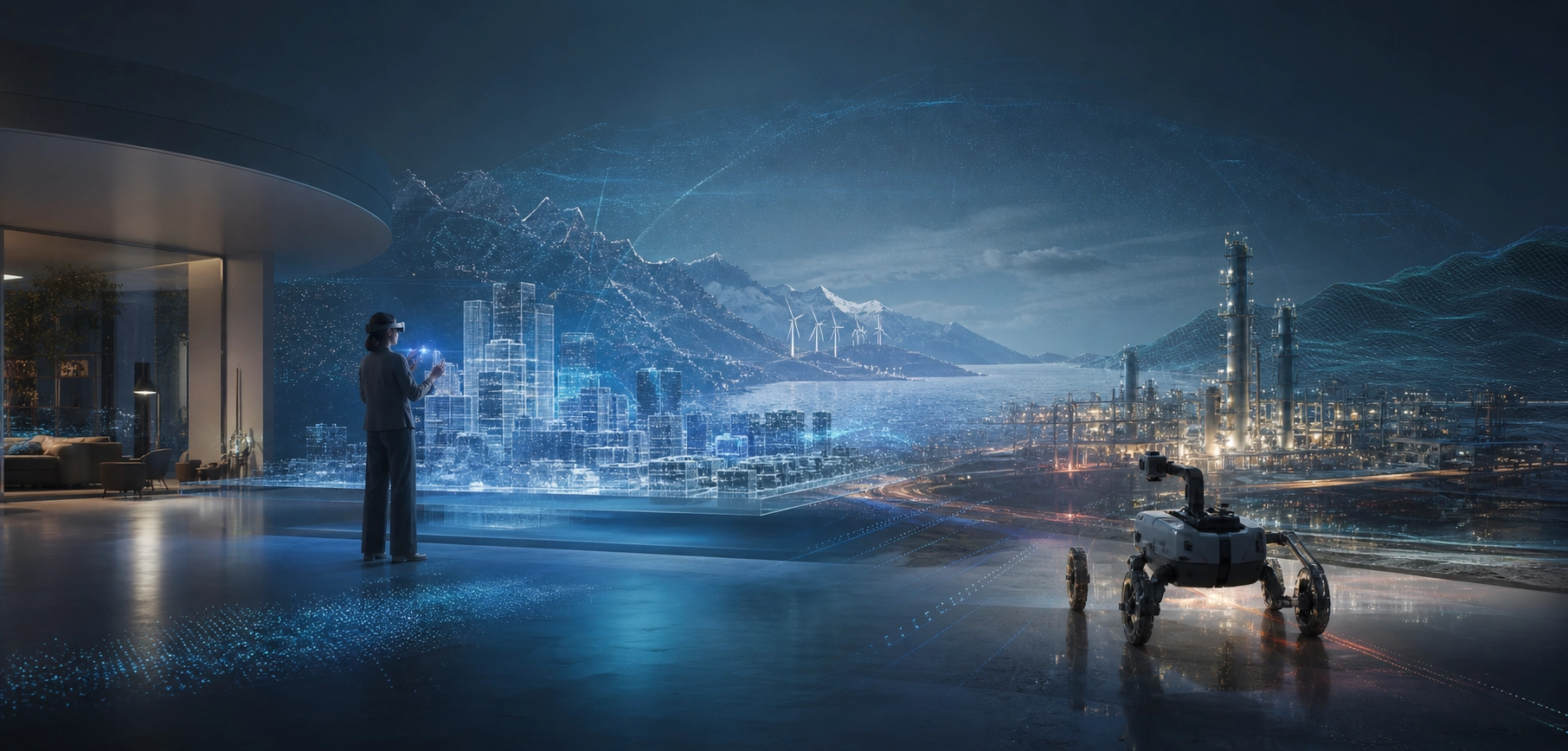
WRL은 인간의 지각과 행동을 물리적 공간의 한계를 넘어 확장하고, 사람과 디지털 세계, 물리세계, 그리고 지능형 로봇을 연결하는 기술을 연구합니다.
WRL의 출발점은 웹을 단순한 정보 전달 매체가 아니라 서로 다른 정보와 공간, 경험, 현실세계를 연결하는 개방형 환경으로 바라보는 Webizing 연구철학입니다. Web3D와 X3D-Earth, Sensor Web에서 시작한 이 연구는 Experiential Web과 실감형 상호작용을 거쳐 오늘날 XR, 공간 컴퓨팅, 디지털 트윈, 인공지능, Physical AI와 로보틱스로 확장되고 있습니다.
2015년 9월 1일 KIST 영상미디어연구단에서 Webizing Research Lab으로 설립된 WRL은 2020년 인공지능연구단, 2024년 지능·인터랙션연구센터를 거치며 사람과 인공지능, 디지털 환경과 물리세계 사이의 상호작용을 연구해 왔습니다.
2026년 9월 1일, 경희대학교에서 WRL은 Worlds & Robotics Lab으로 새롭게 확장되었습니다.
이 변화는 기존 연구 정체성의 단절이 아니라 Webizing의 범위를 넓히는 과정입니다. Webizing Research Lab이 웹을 통해 사람과 정보, 디지털 공간과 물리세계를 연결하는 방법을 탐구했다면, Worlds & Robotics Lab은 이를 바탕으로 사람, 다양한 물리적·디지털 Worlds, 그리고 지능형 Robots를 연결하는 방법을 연구합니다.
Our Vision
Extending Human Perception and Action Across Worlds
WRL에서 Worlds는 하나의 가상세계를 의미하지 않습니다. 우리가 살아가는 물리적 공간, 멀리 떨어진 원격 환경, 현실을 정밀하게 반영하는 디지털 트윈, XR을 통해 경험하는 가상·증강 공간, 실제 공간과 사건을 재구성한 3D·4D 환경, 그리고 인공지능과 로봇이 학습하고 행동하는 시뮬레이션 세계를 모두 포함합니다.
WRL은 이러한 Worlds를
Capture → Represent → Experience → Connect → Interact → Act
하는 기술을 연구합니다.
현실 세계와 인간의 움직임을 정밀하게 획득하고, 이를 지능적인 디지털 표현으로 재구성하며, XR과 공간 디스플레이를 통해 실감 나게 경험할 수 있도록 합니다. 또한 서로 떨어진 사람과 환경을 연결해 자연스럽게 소통하고 협업하게 하며, 인공지능과 로보틱스를 통해 인간의 의도와 행동이 원격의 물리세계까지 이어지도록 합니다.
궁극적으로 WRL은 사람이 더 많은 세계를 깊이 이해하고 경험하며, 그 안에서 능동적으로 행동할 수 있도록 하는 기술을 지향합니다.
Research Philosophy
From the Web of Information to the Web of Experience
초기의 웹은 문서와 정보를 연결하는 환경이었습니다. WRL의 연구철학은 웹의 연결 원리를 정보에만 한정하지 않고 3차원 공간과 지리정보, 센서와 물리적 객체, 인간의 움직임과 경험으로 확장하는 데서 시작되었습니다.
Factual Web
문서, 데이터, 사실과 같은 기존 정보를 웹에서 발견하고 공유하며 연결합니다.
Experiential Web
웹에서 사실을 전달하는 것을 넘어 사용자가 공간과 상황을 직접 보고, 듣고, 움직이며 경험하도록 합니다. 2D·3D·4D 콘텐츠, 지리공간정보, 가상현실과 증강현실, 센서로 연결된 물리세계는 웹을 경험의 환경으로 확장합니다.
Webizing
Webizing은 개별적으로 닫혀 있던 정보, 공간, 장치와 경험을 개방적이고 상호운용 가능한 방식으로 연결하는 연구철학이자 방법론입니다. 도시와 건물, 사람과 사물, 센서와 로봇, 현실과 가상환경처럼 서로 다른 세계를 발견하고 접근하며 공유하고 상호작용할 수 있는 연결 구조로 만드는 것이 핵심입니다.
Webizing means turning isolated systems and worlds into open, connected, interoperable experiences.
Worlds & Robotics
Worlds & Robotics는 Webizing의 철학을 지능형 물리세계까지 확장합니다. 사람과 인공지능이 연결된 세계를 이해하고 자연스럽게 상호작용하며, 로봇을 통해 실제 물리환경에 행동을 만들어 내는 데까지 연구의 범위를 넓힙니다.
WRL은 디지털 세계와 물리세계 사이의 경계를 낮추고, 인간의 경험과 의도, 인공지능의 이해와 판단, 로봇의 물리적 행동이 하나의 연속된 상호작용으로 이어지는 기술을 연구합니다.
Web3D / X3D-Earth → Sensor Web → Experiential Web → Webizing → Worlds & Robotics
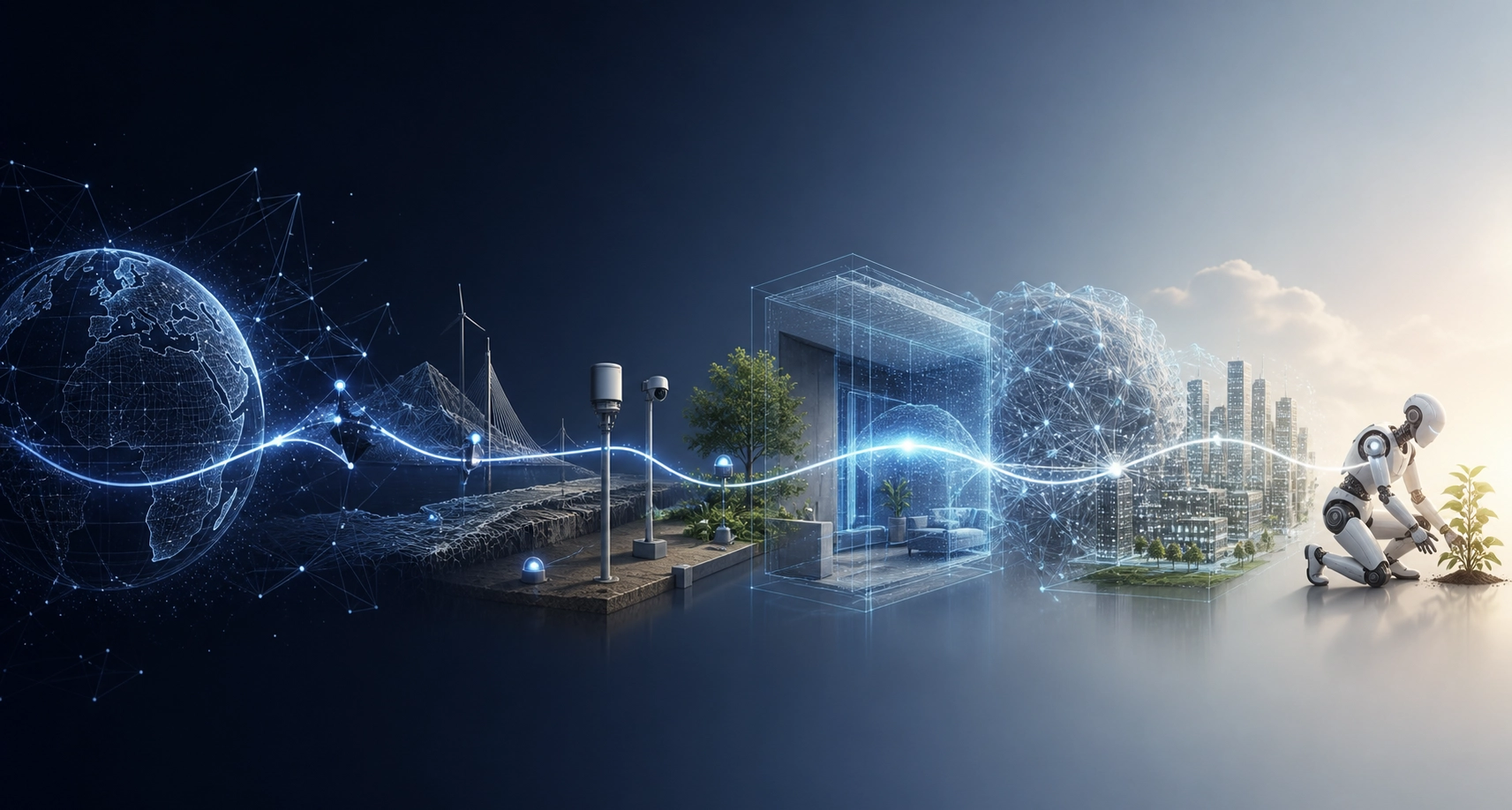
이 흐름은 WRL 연구의 변화를 보여주는 동시에, 처음부터 이어져 온 하나의 질문을 나타냅니다.
How can technology connect people with more worlds—and enable them to experience, understand, and act across those worlds?
Research Directions
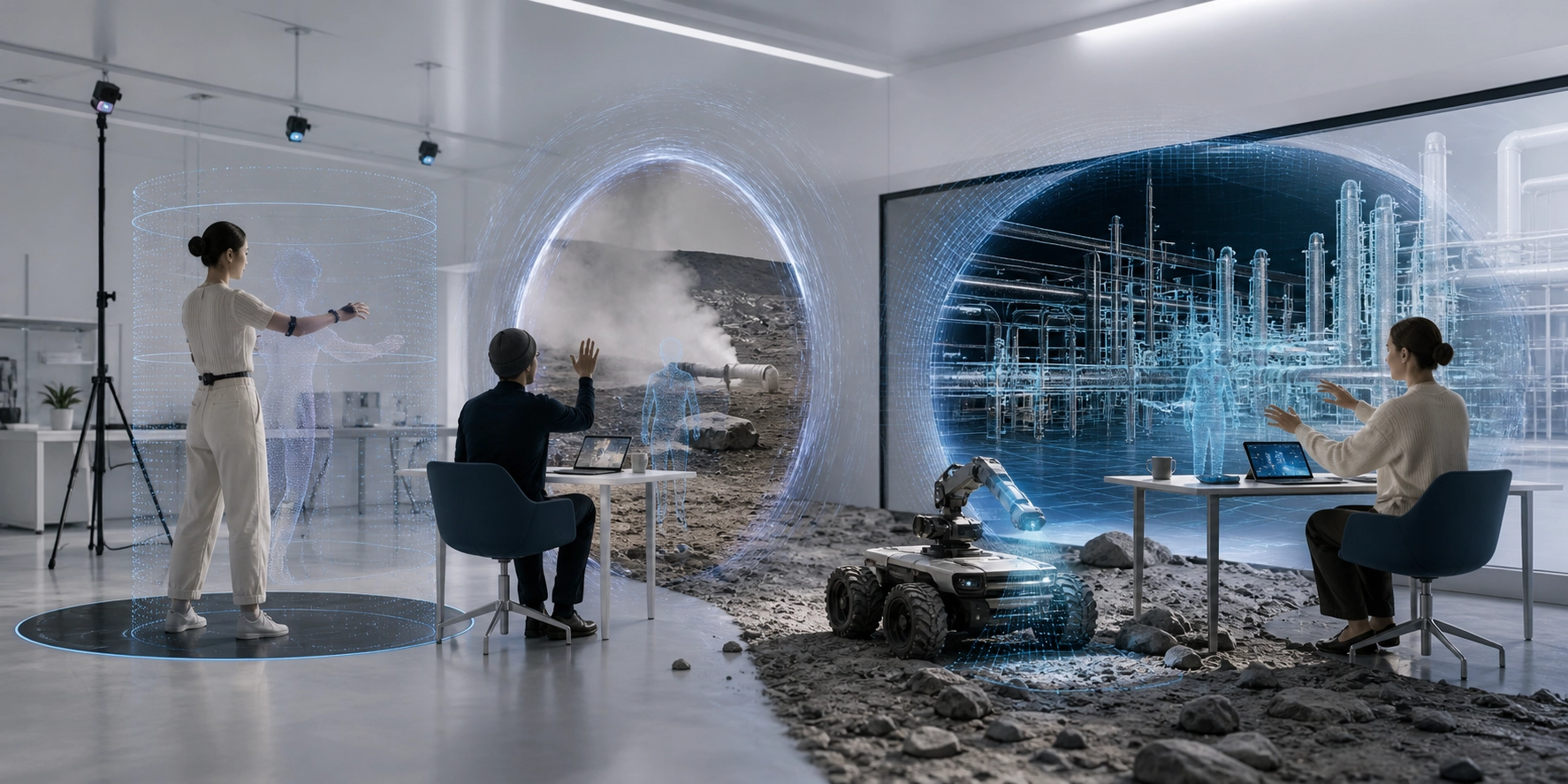
Immersive Worlds
Capturing and Experiencing Physical and Digital Worlds
현실과 디지털 세계를 정밀하게 획득하고 표현하며, 사용자가 자연스럽고 실감 나게 경험할 수 있는 기술을 연구합니다.
•
Extended Reality (XR)
•
Spatial Computing
•
Digital Twins
•
Immersive Volume
•
3D/4D Reconstruction and Representation
•
Spatial Displays
•
Human Motion and Spatial Data Acquisition
•
Real-time Visualization and Rendering
Remote Interaction & Collaboration
Connecting People and Places Beyond Distance
물리적으로 떨어진 사람과 환경을 실감 나게 연결하고, 원격에서도 함께 존재하는 것처럼 소통하고 협업할 수 있는 기술을 연구합니다.
•
Immersive Telepresence
•
XR Remote Collaboration
•
Supersensory XR Interaction
•
Remote Inspection and Control
•
Physical Remote Collaboration
•
Remote Human–Robot Interaction
•
Teleoperation and Remote Embodiment
Physical Intelligence & Robotics
Turning Intelligence into Action
인공지능이 물리세계를 지각하고 이해하며 행동하도록 하고, 사람과 로봇이 안전하고 직관적으로 협력할 수 있는 기술을 연구합니다.
•
Physical AI
•
Robot Perception and Spatial Understanding
•
Human–Robot Interaction
•
Shared Autonomy
•
Intelligent Teleoperation
•
Simulation, World Models, and Sim-to-Real
•
Embodied Intelligence
•
Human–Robot Collaboration
History | Roots and Evolution
WRL의 공식 연혁은 2015년 9월 1일에 시작됩니다. 다만 WRL의 핵심 철학인 Webizing은 2007년부터 이어져 온 Web3D, X3D-Earth, Sensor Web, Experiential Web 연구를 통해 형성되었습니다. 따라서 2007–2015년의 기록은 WRL이라는 조직의 연혁이 아니라, WRL 설립으로 이어진 연구철학의 뿌리를 보여줍니다.
2007–2009 — Web3D and X3D-Earth
Webizing 연구철학의 뿌리는 웹을 문서와 정보의 공간을 넘어 3차원 공간과 지리정보, 물리세계까지 연결하는 환경으로 확장하려는 연구에서 시작되었습니다.
미국 Naval Postgraduate School의 MOVES Institute (Modeling, Virtual Environments and Simulation)에서 이루어진 Web3D와 X3D-Earth 연구는 3차원 공간과 지구 환경을 개방형 웹 표준으로 표현하고 공유하는 가능성을 탐구했습니다. 이 시기의 개방형 Web3D 표준과 상호운용 가능한 3D 환경에 관한 연구는 이후 Webizing 철학의 기술적 기반이 되었습니다.
2009–2012 — Sensor Web and the Physical World
Singapore-MIT Alliance for Research and Technology의 Center for Environmental Sensing and Modeling (SMART CENSAM)에서 Sensor Web Enablement을 연구하며, 현실 세계의 센서와 환경 데이터를 웹에서 발견하고 접근하며 공유하는 방향으로 연구 범위를 확장했습니다.
MIT의 Center for Educational Computing Initiative (CECI)에서 Web3D 연구를 이어가면서, 웹을 정보공간뿐 아니라 물리적 객체와 센서, 지리공간정보와 가상환경을 연결하는 공통 플랫폼으로 바라보는 관점이 구체화되었습니다.
2013–2015 — Toward the Experiential Web
2013년 KIST 영상미디어연구단에서 연구를 시작하면서 앞선 연구 흐름은 Experiential Web과 Webizing이라는 연구철학과 방법론으로 구체화되었습니다.
Experiential Web은 웹을 사실과 정보를 전달하는 Factual Web에서 사용자가 2D·3D·4D 공간, 지리환경, 가상현실과 증강현실, 센서로 연결된 물리세계를 직접 경험하고 상호작용하는 환경으로 확장하는 개념입니다.
2015-09-01 — Webizing Research Lab Founded
KIST 영상미디어연구단에서 Webizing Research Lab (WRL)이 공식적으로 설립되었습니다.
WRL은 Web3D, 공간정보, Sensor Web, Experiential Web으로 이어진 연구철학을 바탕으로 사람과 정보, 가상공간과 물리세계를 연결하는 기술을 연구하기 시작했습니다. Webizing을 기반기술과 플랫폼 개발, 도전적 기술문제 해결, 산업·국가·사회문제 적용으로 이어지는 원천기술 개발 방법론으로 발전시켰습니다.
2015–2019 — Webized 3D and XR
웹 표준 기반의 3D 콘텐츠 표현과 배포, 초다시점 3D 디스플레이, 서로 다른 AR·VR·MR 환경을 연결하는 공통 XR 상호작용 공간을 연구했습니다. Webizing은 3D 콘텐츠 표현에서 여러 사용자가 함께 경험하고 협업하는 shared immersive space로 발전했습니다.
2016–2020 — From Virtual to Physical Collaboration
XR 기반 원격협업과 디지털 트윈 연구를 통해 원격 전문가와 현장 작업자가 정보를 공유하는 것을 넘어 실제 물리적 대상에 함께 작업할 수 있는 협업 환경으로 연구를 확장했습니다.
이 시기는 Webizing의 연구 범위가 Web → 3D Web → XR → Digital Twin → Physical World로 확장된 중요한 전환점입니다.
2020-09-01 — Artificial Intelligence
WRL은 KIST 인공지능연구단으로 연구 기반을 확장하며, Webizing과 인공지능의 결합을 본격화했습니다.
실감형 환경과 인간–컴퓨터 상호작용에 AI를 결합하고, WebXR과 디지털 트윈을 기반으로 인간과 인공지능이 연결된 현실세계를 이해하고 협업하는 지능형 인터랙션 연구를 발전시켰습니다.
2024-09-01 — Intelligence & Interaction
KIST 지능·인터랙션연구센터를 기반으로 인간과 인공지능, 실감환경과 물리세계 사이의 지능적 상호작용을 중심으로 연구 영역을 확장했습니다.
XR과 공간 컴퓨팅, 인공지능과 인터랙션 기술을 결합하여 사람이 다양한 디지털·물리 환경을 자연스럽게 경험하고 제어하며 협업하는 방법을 탐구했습니다.
2026-09-01 — Worlds & Robotics Lab
경희대학교에서 WRL은 Worlds & Robotics Lab으로 새롭게 확장되었습니다.
이 변화는 Webizing 연구철학과의 단절이 아니라 그 범위의 확장입니다. Webizing Research Lab이 웹을 통해 사람과 디지털 공간, 물리세계를 연결하는 방법을 연구했다면, Worlds & Robotics Lab은 이를 바탕으로 사람, 다양한 물리적·디지털 Worlds, 그리고 지능형 Robots를 연결하는 방법을 연구합니다.
Our Journey
From Connecting Information to Connecting People, Worlds, and Robots
WRL의 이름과 기술은 변화해 왔지만, 연구의 중심에는 언제나 같은 질문이 있었습니다.
어떻게 서로 분리된 정보와 공간, 사람과 환경을 더 개방적으로 연결할 수 있는가?
어떻게 사람은 멀리 떨어진 세계를 실제처럼 경험하고 그 안에서 행동할 수 있는가?
어떻게 인공지능과 로봇은 사람의 의도를 이해하고 물리세계에서 함께 협력할 수 있는가?
WRL은 이러한 질문에 답하기 위해 현실을 획득하고, 세계를 표현하며, 경험을 설계하고, 사람과 공간을 연결하며, 지능적인 상호작용과 행동을 구현합니다.
From connecting information, to connecting experiences, to connecting worlds, and ultimately, to connecting people, worlds, and robots.
Connecting People, Worlds, and Robots.
사람이 더 많은 세계를 경험하고, 더 깊이 이해하며, 더 멀리 행동할 수 있도록 —
WRL은 디지털 세계와 물리세계가 연결되고, 인간과 지능형 로봇이 함께 협력하는 미래를 만들어 갑니다.
About WRL
Worlds & Robotics Lab
Connecting People, Worlds, and Robots.
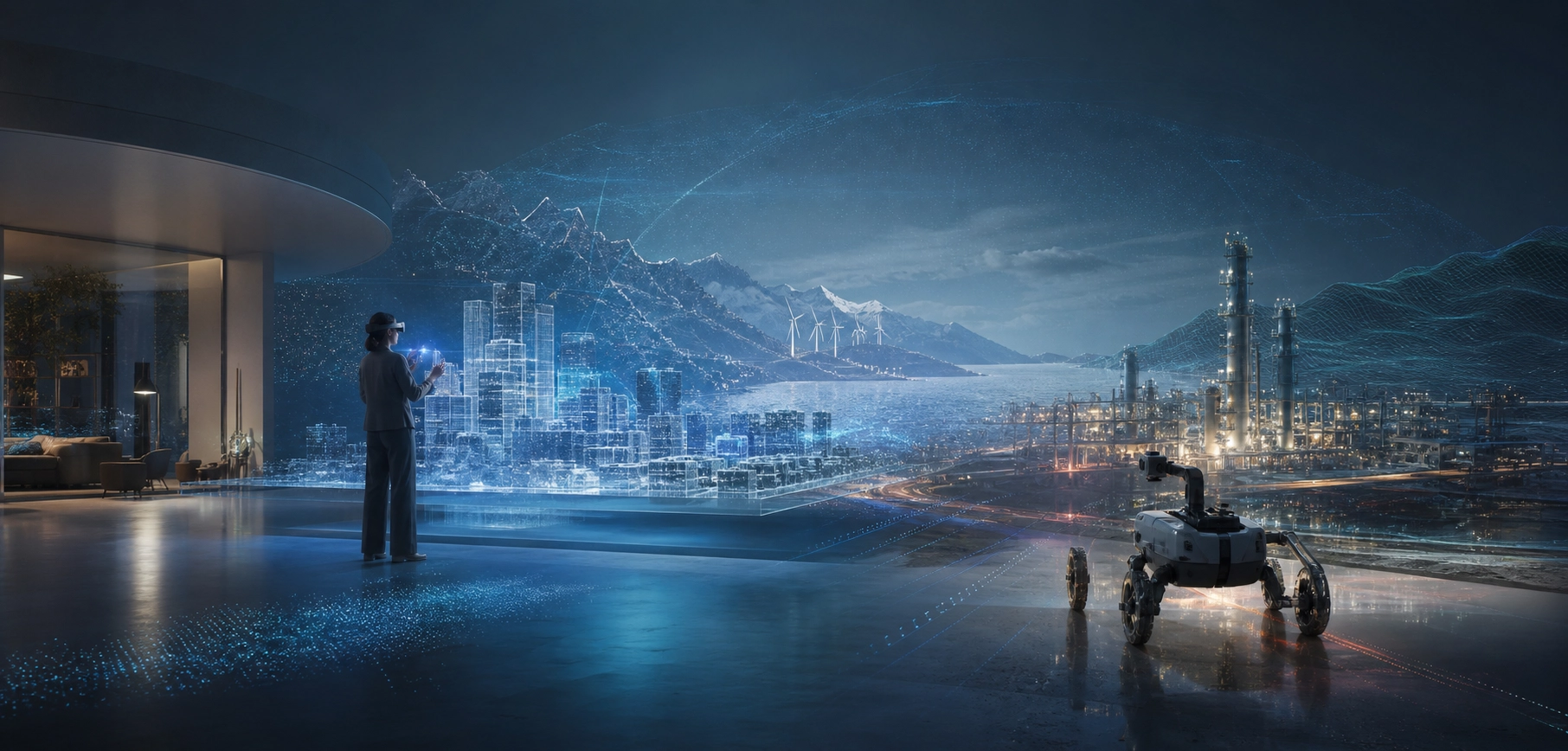
WRL investigates technologies that extend human perception and action beyond the limits of physical space, connecting people with digital worlds, the physical world, and intelligent robots.
WRL originated from the research philosophy of Webizing: viewing the Web not merely as a medium for delivering information, but as an open environment for connecting disparate information, spaces, experiences, and the real world. Beginning with Web3D, X3D-Earth, and the Sensor Web, this research evolved through the Experiential Web and immersive interaction and now encompasses XR, spatial computing, digital twins, artificial intelligence, Physical AI, and robotics.
Founded as the Webizing Research Lab within the KIST Imaging Media Research Division on September 1, 2015, WRL continued its research within the Artificial Intelligence Research Division in 2020 and the Intelligence & Interaction Research Center in 2024, exploring interactions among people, artificial intelligence, digital environments, and the physical world.
On September 1, 2026, WRL expanded into the Worlds & Robotics Lab at Kyung Hee University.
This transition does not represent a departure from WRL’s established research identity, but an expansion of the scope of Webizing. Whereas the Webizing Research Lab explored how the Web could connect people and information, digital spaces, and the physical world, the Worlds & Robotics Lab builds on that foundation to investigate how to connect people, diverse physical and digital Worlds, and intelligent Robots.
Our Vision
Extending Human Perception and Action Across Worlds
At WRL, Worlds does not refer to a single virtual world. It encompasses the physical spaces in which we live, remote environments, digital twins that faithfully reflect reality, virtual and augmented spaces experienced through XR, reconstructed 3D and 4D environments of real places and events, and simulated worlds in which AI systems and robots learn and act.
WRL develops technologies to
Capture → Represent → Experience → Connect → Interact → Act
across these Worlds.
We precisely capture the physical world and human movement, reconstruct them as intelligent digital representations, and make them available as compelling experiences through XR and spatial displays. We also connect geographically separated people and environments to support natural communication and collaboration, while using AI and robotics to extend human intent and action into remote physical worlds.
Ultimately, WRL pursues technologies that enable people to understand and experience more worlds in greater depth—and to act within them with agency.
Research Philosophy
From the Web of Information to the Web of Experience
The early Web was an environment for connecting documents and information. WRL’s research philosophy began by extending the Web’s principle of connectivity beyond information to three-dimensional spaces, geospatial information, sensors and physical objects, human movement, and experience.
Factual Web
The Factual Web enables existing information—including documents, data, and facts—to be discovered, shared, and connected on the Web.
Experiential Web
The Experiential Web goes beyond communicating facts, enabling users to see, hear, move through, and directly experience spaces and situations. Two-, three-, and four-dimensional content, geospatial information, virtual and augmented reality, and sensor-connected physical environments transform the Web into an environment for experience.
Webizing
Webizing is both a research philosophy and a methodology for connecting previously isolated information, spaces, devices, and experiences in open and interoperable ways. Its central aim is to create connected structures through which diverse worlds—including cities and buildings, people and objects, sensors and robots, and physical and virtual environments—can be discovered, accessed, shared, and experienced interactively.
Webizing means turning isolated systems and worlds into open, connected, interoperable experiences.
Worlds & Robotics
Worlds & Robotics extends the philosophy of Webizing into intelligent physical worlds. It broadens the scope of research from connecting worlds to enabling people and AI systems to understand and interact naturally within them—and ultimately to generate actions in real physical environments through robots.
WRL investigates technologies that reduce the boundaries between digital and physical worlds, creating a continuous interaction among human experience and intent, AI-based understanding and decision-making, and robotic action in the physical world.
Web3D / X3D-Earth → Sensor Web → Experiential Web → Webizing → Worlds & Robotics
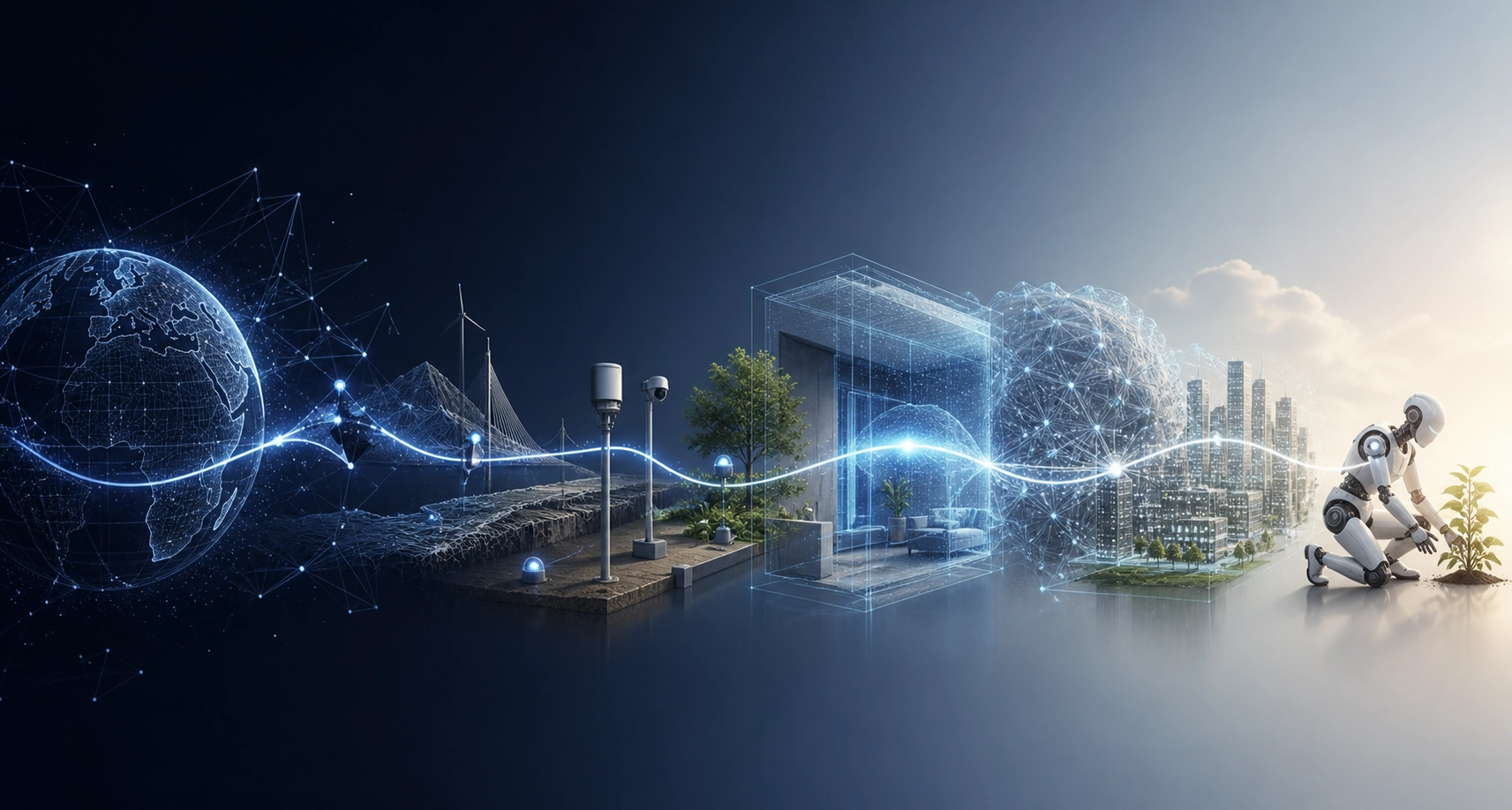
This progression illustrates the evolution of WRL’s research while reflecting a question that has guided it from the beginning:
How can technology connect people with more worlds—and enable them to experience, understand, and act across those worlds?
Research Directions
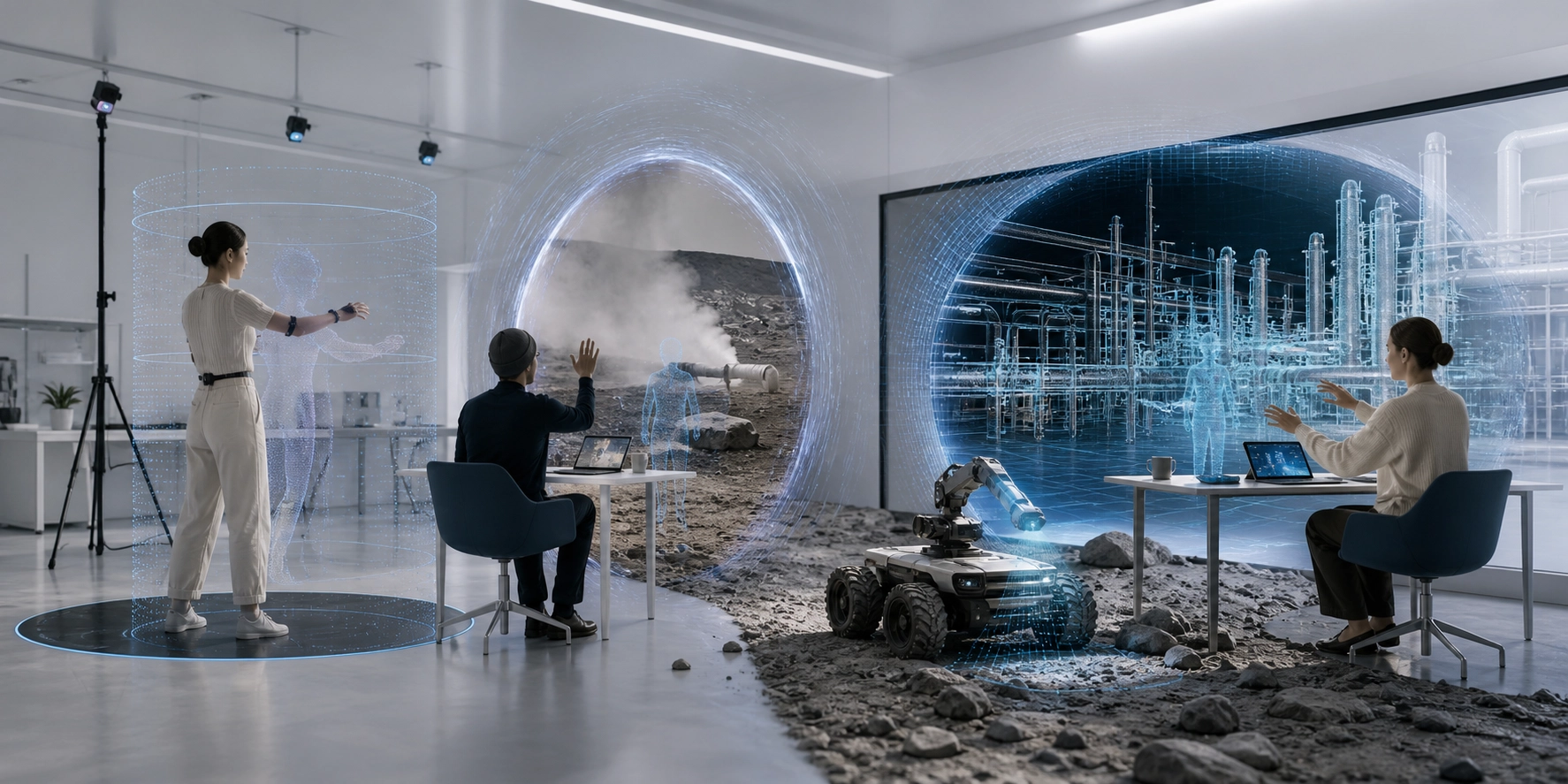
Immersive Worlds
Capturing and Experiencing Physical and Digital Worlds
We investigate technologies for precisely capturing and representing physical and digital worlds so that users can experience them naturally and immersively.
•
Extended Reality (XR)
•
Spatial Computing
•
Digital Twins
•
Immersive Volume
•
3D/4D Reconstruction and Representation
•
Spatial Displays
•
Human Motion and Spatial Data Acquisition
•
Real-time Visualization and Rendering
Remote Interaction & Collaboration
Connecting People and Places Beyond Distance
We investigate technologies that create a compelling sense of connection between geographically separated people and environments, enabling communication and collaboration as though participants were physically present together.
•
Immersive Telepresence
•
XR Remote Collaboration
•
Supersensory XR Interaction
•
Remote Inspection and Control
•
Physical Remote Collaboration
•
Remote Human–Robot Interaction
•
Teleoperation and Remote Embodiment
Physical Intelligence & Robotics
Turning Intelligence into Action
We investigate technologies that enable AI systems to perceive, understand, and act within the physical world while supporting safe, intuitive collaboration between people and robots.
•
Physical AI
•
Robot Perception and Spatial Understanding
•
Human–Robot Interaction
•
Shared Autonomy
•
Intelligent Teleoperation
•
Simulation, World Models, and Sim-to-Real
•
Embodied Intelligence
•
Human–Robot Collaboration
History | Roots and Evolution
WRL’s official history began on September 1, 2015. Its core philosophy of Webizing, however, emerged from research in Web3D, X3D-Earth, the Sensor Web, and the Experiential Web dating back to 2007. The period from 2007 to 2015 therefore represents the intellectual roots that led to WRL’s establishment, rather than the organizational history of WRL itself.
2007–2009 — Web3D and X3D-Earth
The roots of the Webizing research philosophy lie in efforts to extend the Web beyond documents and information into an environment connecting three-dimensional spaces, geospatial information, and the physical world.
Research on Web3D and X3D-Earth at the MOVES Institute (Modeling, Virtual Environments and Simulation) of the U.S. Naval Postgraduate School explored how three-dimensional spaces and the Earth’s environments could be represented and shared through open Web standards. This work on open Web3D standards and interoperable 3D environments provided the technical foundation for the subsequent philosophy of Webizing.
2009–2012 — Sensor Web and the Physical World
Research on Sensor Web Enablement at the Center for Environmental Sensing and Modeling (SMART CENSAM) of the Singapore-MIT Alliance for Research and Technology expanded the research scope toward enabling sensors and environmental data from the physical world to be discovered, accessed, and shared through the Web.
Continued Web3D research at MIT’s Center for Educational Computing Initiative (CECI) further developed the view of the Web as a common platform connecting not only information spaces but also physical objects and sensors, geospatial information, and virtual environments.
2013–2015 — Toward the Experiential Web
With the beginning of research at the KIST Imaging Media Research Division in 2013, the preceding research trajectory was consolidated into the philosophy and methodology of the Experiential Web and Webizing.
The Experiential Web extends the Web from a Factual Web that communicates facts and information into an environment in which users can directly experience and interact with two-, three-, and four-dimensional spaces, geospatial environments, virtual and augmented reality, and sensor-connected physical worlds.
September 1, 2015 — Webizing Research Lab Founded
The Webizing Research Lab (WRL) was officially established within the KIST Imaging Media Research Division.
Building on a research philosophy spanning Web3D, geospatial information, the Sensor Web, and the Experiential Web, WRL began investigating technologies that connect people and information, virtual spaces, and the physical world. Webizing was further developed into a methodology for foundational technology development—progressing from core technologies and platform development through the resolution of challenging technical problems to applications addressing industrial, national, and societal needs.
2015–2019 — Webized 3D and XR
WRL investigated standards-based representation and delivery of 3D content on the Web, super-multiview 3D displays, and common XR interaction spaces connecting heterogeneous AR, VR, and MR environments. Webizing evolved from the representation of 3D content into a shared immersive spacein which multiple users could experience and collaborate together.
2016–2020 — From Virtual to Physical Collaboration
Through research on XR-based remote collaboration and digital twins, WRL expanded from enabling remote experts and on-site workers to share information toward creating collaborative environments in which they could work together on real physical objects.
This period marked an important expansion of Webizing from the Web → 3D Web → XR → Digital Twin → Physical World.
September 1, 2020 — Artificial Intelligence
WRL expanded its research foundation within the KIST Artificial Intelligence Research Division, deepening the integration of Webizing and artificial intelligence.
By combining AI with immersive environments and human–computer interaction, WRL advanced intelligent interaction research based on WebXR and digital twins, enabling people and AI systems to understand and collaborate within a connected physical world.
September 1, 2024 — Intelligence & Interaction
Within the KIST Intelligence & Interaction Research Center, WRL expanded its research around intelligent interactions among people, AI, immersive environments, and the physical world.
By integrating XR and spatial computing with artificial intelligence and interaction technologies, WRL explored how people could naturally experience, control, and collaborate across diverse digital and physical environments.
September 1, 2026 — Worlds & Robotics Lab
At Kyung Hee University, WRL expanded into the Worlds & Robotics Lab.
This transition does not represent a departure from the philosophy of Webizing, but an expansion of its scope. Whereas the Webizing Research Lab investigated how the Web could connect people, digital spaces, and the physical world, the Worlds & Robotics Lab builds on that foundation to explore how to connect people, diverse physical and digital Worlds, and intelligent Robots.
Our Journey
From Connecting Information to Connecting People, Worlds, and Robots
Although WRL’s name and technologies have evolved, the same questions have always remained at the heart of its research:
How can we connect isolated information and spaces, people and environments, more openly?
How can people experience distant worlds as if they were physically present and act within them?
How can AI systems and robots understand human intent and collaborate with people in the physical world?
To answer these questions, WRL captures reality, represents worlds, designs experiences, connects people and spaces, and realizes intelligent interaction and action.
From connecting information, to connecting experiences, to connecting worlds, and ultimately, to connecting people, worlds, and robots.
Connecting People, Worlds, and Robots.
To enable people to experience more worlds, understand them more deeply, and act across greater distances —
WRL is shaping a future in which digital and physical worlds are connected and humans collaborate with intelligent robots.