



 Overview
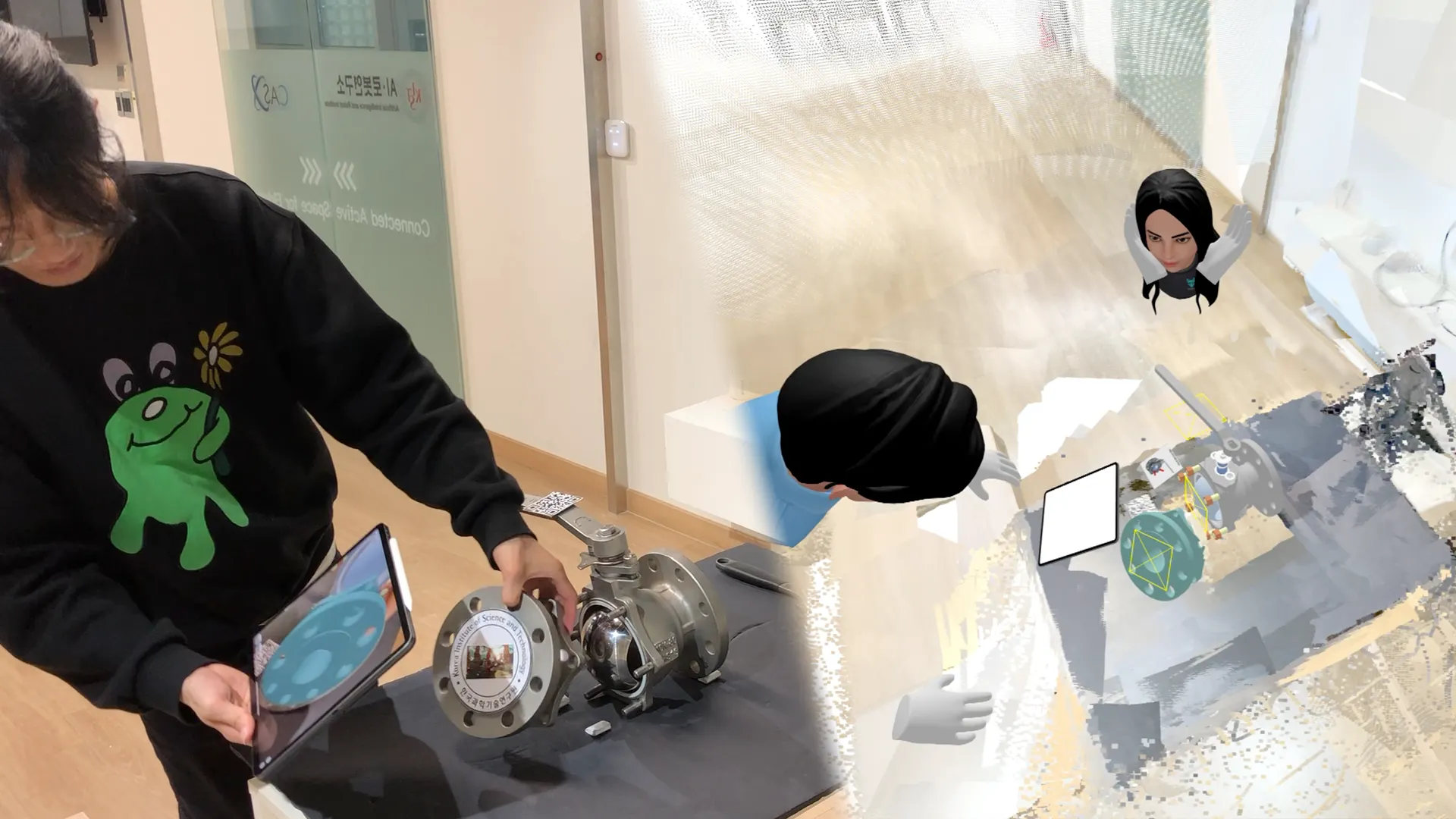
Extended reality (XR) is a term referring to all real-and-virtual combined environments and human-machine interactions generated by computer technology and wearables, where the 'X' represents a variable for any current or future spatial computing technologies. [1] e.g. It includes representative forms such as augmented reality (AR), mixed reality (MR) and virtual reality (VR) [2] and the areas interpolated among them. The levels of virtuality range from partially sensory inputs to immersive virtuality, also called VR.
XR is a superset which includes the entire spectrum from "the complete real" to "the complete virtual" in the concept of reality–virtuality continuum introduced by Paul Milgram. Still, its connotation lies in the extension of human experiences especially relating to the senses of existence (represented by VR) and the acquisition of cognition (represented by AR). With the continuous development in human–computer interactions, this connotation is still evolving.
XR is a rapid growing field being applied in a wide range of ways, such as entertainment, marketing, real-estate, training and remote work[3].
 People
Gallery
Search


 Projects

"완벽한 현실"에서 객체간의 관계와 "완벽한 가상"에서 객체간의 관계는 개념적으로 동일하며, 혼합현실(XR)에서는 단일된 방법으로 현실과 가상을 모델링하고 통합할 수 있습니다. 저희는 웹을 기반으로, XR을 효과적으로 모델링하고 현실과 가상을 정밀하게 융합하는 방법인 WXR(Webized-XR)을 연구하고 있습니다. WXR은 현실과 가상의 경계를 허물고 누구나 쉽게 XR 콘텐츠를 만들고 배포할 수 있는 서비스를 제공합니다.
 Publications
Table
Search

 StreamSplat: A Hybrid Client-Server Architecture for Neural Graphics using Depth-based Fusion on the Web


